

Commentary on Matthew 2:1-12

In the context of God’s long-standing presence with Israel (Matthew 1:1–17), God has initiated the conception and commissioning of Jesus (1:18–25). Jesus is commissioned to manifest God’s saving presence (1:21–23). Here in chapter 2, he is born into a contested world that sets the scene for the whole gospel and is marked by contrasting responses of homage and violence.
First on the scene are the magi, the often controversial, priestly-political, star-gazing figures from the east. They come to pay homage to Jesus. But good intentions go awry with foolish performance. They ask a very dumb question in Herod’s political center of Jerusalem: “Where is the one born King of the Jews?” For so-called “wise guys,” this is an extraordinarily naïve question.
Why is the question about a newborn king so personally and politically frightening for King Herod and his loyalists (2:3)? Because in the Roman Empire, Rome alone appointed legitimate provincial kings like Herod. At times, though, unsanctioned popular kings emerged. Rome executed them as illegitimate and treasonous.
Herod’s fear is that either Rome has replaced him as ruler (but has forgotten to send him the email) or that he has a popular uprising on his hands.
The rest of the chapter reveals Herod’s character and sets out four of the strategies he, as a typical ruling tyrant, employs to maintain power and self-beneficial privileges. Herod is constructed according to the pattern of “the kings of the earth” of Psalm 2. He resists God’s “anointed,” and God laughs him into oblivion (Psalm 2:2–4).
First, Herod summons his allies in the ruling coalition (Matthew 2:4–6). While we think of chief priests and scribes as religious figures, they are much better understood as societal-political leaders (see Sirach 38:24–39:11). Roman governors appointed chief priests. Herod inquires about the birthplace of the Messiah. His allies respond by citing a passage from Micah 5:2 (Matthew 2:5–6).
We must note two things about this exchange. First, the Micah passage makes no reference to a Messiah, nor to Jesus. Rather, it refers to Assyria’s destruction of Samaria in 722 and its anticipated attack on Jerusalem. Out of the ruins, it anticipates a new beginning with a new Jerusalem and a new David from Bethlehem (Micah 5:1–6).
The Gospel reads the Micah passage through Jesus-tinted glasses to identify Jesus as the Davidic ruler of a people free from imperial power. That is, the Gospel creates an analogy between Assyria’s imperial power and Rome’s imperial power to affirm the victory of God’s purposes. Subsequently, the Gospel interprets Rome’s destruction of Jerusalem in 70 CE as divine punishment on its leaders (Matthew 22:7), yet in an astonishingly bold vision, it envisions Rome’s empire as doomed for destruction at Jesus’ return (Matthew 24–25).
The last line of the citation (“who is to shepherd my people Israel”) comes from 2 Samuel 5:2. It employs the very common image of “shepherd” for leaders. We can think of the condemnation of Israel’s elite, in Ezekiel 34, for ruling harshly and selfishly in failing to provide food, clothing, shelter, and safety for the people. Various Roman authors identify emperors as “shepherds.” Within the Gospel, Jesus describes the people as being “sheep without a shepherd,” styling the Jerusalem-based, Rome-allied, oppressive and exploitative leaders as “not-shepherds” who look after their own interests but fail to care for the people (9:36).
Second, it is important to remember that there was no widespread, standard, uniform expectation of a messiah. There were diverse expectations about different types of messiahs with different job descriptions. The Gospel aligns with hopes from some for a return of a Davidic ruler (1:1). Here in 2:5–6, the Jerusalem leaders speak the Gospel’s perspective in linking Jesus with Bethlehem, the place where David was anointed king (1 Samuel 16).
Having consulted his allies to gain this information, Herod takes up a second strategy (Matthew 2:7–8a). He summons the magi and turns them into spies. Allies and spies. He dispatches the magi to Bethlehem to locate the child. They are to report his location to Herod.
Why? To his two previous strategies of allies and spies, Herod now adds a third strategy: lies. He informs the magi that he “too may also go and pay him homage” (2:8b). The subsequent narrative reveals the lie. He wants to kill Jesus, not worship him.
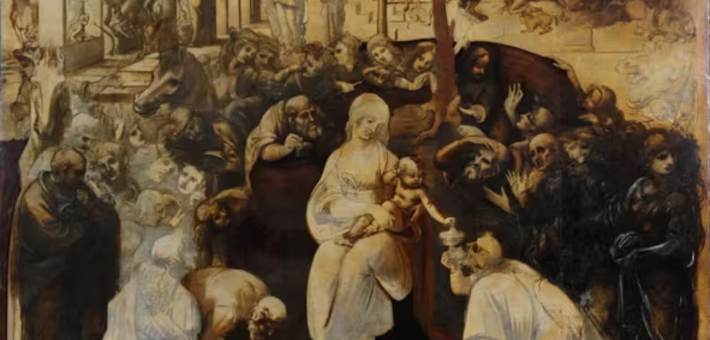
In the midst of this assertion of power, the magi both comply and resist. They go as commanded, find Jesus, and pay homage with gifts. Herod’s hate cannot stop them from honoring God’s Anointed One.
The magi’s gifts have been interpreted in various ways in the church’s history. Some have seen them as statements about Jesus’ identity as king (gold), priest (frankincense), and the crucified (myrrh). Others have seen them as representing practices of discipleship: faith and mercy (gold), prayer and love (frankincense), good works and mortifying the flesh/purity (myrrh).
And then the magi defy Herod. They do not return to him, as ordered, to report Jesus’ location. Rather, being warned in a dream, they return to their homeland “by another way.” Dreams recur through Matthew 2 (verses 12, 13, 19, 22) as a means of divine intervention in protecting Jesus by guiding people for his well-being.
The “other way” that the magi take refuses Herod’s agenda. It thwarts the tyrant’s will. It refuses cooperation.
Thwarted, Herod takes up his fourth strategy, infanticide—his ruthless, vicious attack on the infants of Bethlehem and its environs (2:16–18).
Allies, spies, lies, infanticides. Four (rhyming!) strategies of tyrants, then and now.
All will not be well in this clash of sovereignties between the empire of Rome and the empire of God. God will not be able to prevent Herod’s murder of the infants. Later, Jesus too will die. The promised establishment of God’s empire has not (yet) been completed in full. The “other way” requires perseverance, faithfulness, courage, and community.


January 6, 2026