

Commentary on Ephesians 3:1-12

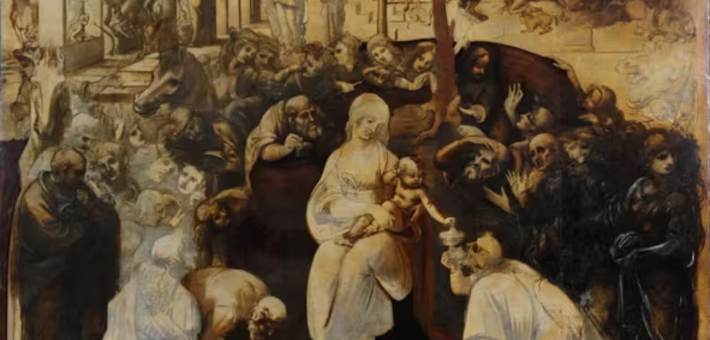
Most of us are familiar with Epiphany as a significant event in the church’s liturgical calendar. It happens at the year’s beginning, is celebrated on January 6—traditionally the 12th day of Christmas—and commemorates the visitation of the Christ child by the magi, who, according to tradition, bore gifts of gold, frankincense, and myrrh. These men are characters in, undoubtedly, one of the most famous episodes concerning the Nativity in all of Christendom. It speaks of men, traditionally, three—possibly due to the three distinct kinds of gifts—thought to be trained in the reading of the stars and hence called wise, who came to see Jesus.
The Ethiopian Orthodox Church holds that one of their ancient rulers, King Bazen of Axum, was one of the magi who, prompted by a supernatural astrological event, searched for a king and visited Joseph, Mary, and Jesus, much to the chagrin of King Herod. Herod, the ruler of the Roman outpost of Judea, governed the area, commingling his political authority with the signs, symbols, and festivals that the Jewish people held as sacred. He infiltrated the temple system and even used his power to select the high priest. The Roman Empire, under the rule of Caesar Augustus and his cadre of handpicked subordinates, reigned supreme in that region. Yet the magi showed up.
As they followed a star, their epiphany—or revelation—was that God had sent a king amid the chaos and corruption of Roman-occupied Judea. It was as if their visit made them eyewitnesses to the messianic words of Isaiah, who wrote in the beginning clause of the sixth verse of his book’s ninth chapter, “For a child has been born for us, a son given to us; authority rests [“government shall be”—King James Version] upon his shoulders.” That God had an answer and plan for the lack of care, compassion, and concern for all of God’s people by the nation’s leadership was a divine revelation, marked by wise men who, with limited permission from the earthly king, visited and brought gifts to the sovereign toddler.
This is a different epiphany than the one Paul speaks of in Ephesians 3:1–12. The apostle, whom Dr. Fredrick Douglas Haynes homiletically calls “the gospel-globetrotting tentmaker from Tarsus,” is addressing the Ephesian church and offering commentary on God revealing Godself to humanity. The context of the Pauline epiphany, however, is different from that celebrated today. Here, Paul seemingly attempts to offer an apologetic defense of his call to be an apostle to the gentiles, who were heretofore excluded from the promise of God. However, through an epiphany in which God revealed Godself, Paul is empowered to preach “the mysteries of Christ” to the gentiles, making them joint heirs with the people of Israel and inviting them to have a believing faith in Jesus Christ.
Perchance, two things can be true at the same time, and both lines of thought find importance and relevance, and give us hope today, at a time when governments seem to care less about the well-being of all their citizens, championing the rights of some while relegating others to the margins of the lost, the last, and the least. Where governmental shutdowns and the policing of citizens on domestic streets produce unrest, anxiety, and fear throughout the land.
Could it be that we can find hope and a measure of assurance in the Lord’s grace, in the epiphany that God cared enough about God’s people to send revelation in the personhood of Jesus of Nazareth, on whom divine authority rested, as Sovereign? One that comes with power and influence to bring God’s will to pass on Earth as it is in Heaven.
Furthermore, is it also possible for us to find a deep significance in God’s revelation to Paul and his commission to preach, with equal invitation, the gospel of Jesus Christ to the gentiles? Could it be that the reason God chooses self-revelation is to invite those who are different from us? Maybe the burden of epiphany rests on God because humanity cannot be trusted to carry it out.
Could part of the fallenness of the human condition be that we are too self-centered to share God’s revelation with everyone? Perhaps God knows us well enough to realize that we only reveal God to people we like, who think and act like us, and that a broader scope of revelation is beyond our grasp: “I mean, come on, God, do you really want to reveal yourself to the gentiles, the poor, women; Black, white, or Latinx people; to immigrants, and the differently abled; even gay or trans individuals?”
This, my friends, is the power of Epiphany. It is a grand break-in, and the culprit is the Divine. It is the Creator caring so much about their creation that a personal visit is needed. It is neither a requested nor a negotiated visit; no permission was granted, nor was the visit scheduled to accommodate humanity, which is bound by chronological time. No, an eternal decision was made for Heaven to kiss Earth on our behalf as God revealed Godself to humanity. Be it to enact justice and eradicate the pervasive inequity that seems to be everywhere, or for the Grand Lover of us all to call us equally into relationship with both God and others, we cannot know for sure. However, one thing we can know in this Epiphany season is that God loved humanity enough to reveal Godself to us, and that, friends, is worth celebrating. Amen and Ase’.


January 6, 2026