

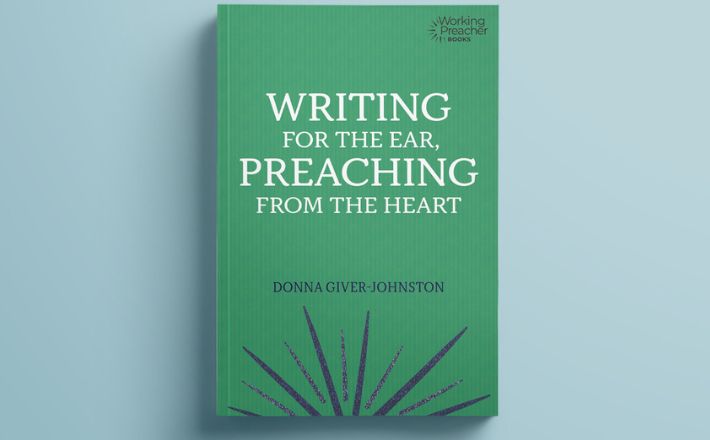

Making connections is at the center of preaching, according to Donna Giver-Johnston. In her book Writing for the Ear, Preaching from the Heart, she acknowledges the challenge of connecting the ancient world with the world today. But perhaps the greater challenge a preacher faces now is connecting with people who come with a lot of questions in our secular, postmodern context, where more and more of our listeners are not very familiar with the Bible.
Connecting as a preacher means investing in relationships, making sure our message is relevant and making it real for people’s lives, so that listeners feel deeply known.
How do we capture ears in an era of noise and distraction?
Giver-Johnston’s method and understanding of “connection” is grounded in the theology of incarnation. We have a God of deep connection. Connections happen all throughout the week, and we plug into them when preaching on Sundays. When listeners feel they know you and trust you, they meet you halfway.
Why preach without a manuscript?
There came a time when Giver-Johnston realized: “If I (as the preacher) couldn’t remember a sentence, chances are those listening weren’t going to either.” She began editing her sermon manuscripts to make them heard, which means using intentionally shorter sentences and the common language of the community.
Will everything really fall apart if you don’t preach from a manuscript? Try it, she says. You might be surprised. It’s easier. And YOU will be spiritually enriched, by being suspended in that moment of trust with God.
Seeing people in the pews and knowing what is going on in their lives can change the direction you take as you wonder—perhaps quickly—how this connects with their lives right now. This makes the sermon more of a dialogue, and in a dialogue, we have to be present and respond to others.
The book provides compelling reasons to try preaching without a manuscript:
- Preaching is rooted in an oral history of passing these stories down voice-to-ear.
Has preaching been trapped in the “Gutenberg galaxy” of the written word? Scripture was written for audiences hearing, not reading, so this can be closer to the earliest audiences’ experience. - It’s grounded in our theology! We are called not just to “tell” but to “show” or embody God’s Word. The “performance” of the word is the message. Preaching directly to people—without the manuscript coming between you—may embody that more clearly. So we might make a shift: from spending most of our time quietly wordsmithing a manuscript, to more time practicing the performance of it so that the preaching experience connects.
- It’s needed in our culture today. People listen differently. They don’t have as much background in the biblical story. They are distracted and have shorter attention spans.
If you know throughout the week that you are going to preach without a manuscript, it helps you put the sermon together differently. Preaching from memorized Scripture texts can also change your delivery, and can become a spiritual experience for you, as well as your listeners.
Preparation is key
Giver-Johnston is definitely not saying that preaching without a manuscript is a spontaneous experience where we “tax the Holy Spirit.” Preaching a sermon is not a 15-minute sprint, but more like a weeklong marathon of exegetical and spiritual preparation. As anyone who has run a marathon will tell you, you have to really take care of yourself the entire time—body, mind, and spirit. In the case of a sermon, we prepare to give ourselves more opportunities to listen to what the Spirit is saying.
Like Moses, the preacher is claiming, “I’ve been to the mountain to hear from God, taking your concerns with me, and here’s what I heard.” If you’ve done all your work during the week, then the Spirit has much more to work with.
On the podcast episode about her book, Rolf asked the author: “How do you keep off-manuscript preaching from going too long?” Practice, practice, practice! Giver-Johnston times herself and practices in the sanctuary ahead of time. This is also her strategy for preaching sermons that you know are going to be difficult, like giving the eulogy at her own dad’s funeral. She practiced so much beforehand that she could let out all the tears and emotional reactions before delivering it to other people.
For more on this volume in the Working Preacher Books series, Writing for the Ear, Preaching from the Heart, listen to a podcast episode or watch it on YouTube, in which Rolf Jacobson and Karoline Lewis discuss the book with author Donna Giver-Johnston.