

Commentary on Matthew 13:31-33, 44-52

When my grandson Devon was 13 years old, he wrote a rap song. He performed it for me with a speed and cadence that baffled me. I could not follow the rhythm, nor decode the metaphors his 13-year-old brain deployed with such confidence. So I asked him if he might share the lyrics with me. He handed me a sheet of paper, and the next time he performed the song, the message landed.
This is the work Jesus is doing in Matthew 13. He is handing us a sheet of paper because he wants the parables to land.
The preacher’s problem
Every preacher knows the terror of the metaphor that does not work. You build a whole sermon around an image, and you watch it sail clean over the heads of half the congregation. A metaphor is only as powerful as its audience’s capacity to understand it. Jesus knows this. So he does not offer one parable and move on. In rapid-fire succession, he offers five, with each one hoping to land the metaphor for a different pair of ears.
The structure of the passage reveals a preacher working the room. The mustard seed and the yeast (verses 31–33) speak to those who know the land and the kitchen. The hidden treasure and the pearl (verses 44–46) speak to those who understand acquisition, risk, and the marketplace. The dragnet full of fish (verses 47–50) speaks to those whose livelihood depends on the sea. Jesus moves from agrarian to domestic to commercial to maritime, and his logic is not repetition for repetition’s sake. His is the logic of a teacher who refuses to leave any pupil behind.
However, no matter which parable grabs your attention, the point is the same: The kingdom of heaven is valuable beyond measure, it is at work even when you cannot see it, and it will cost you everything to participate in it fully.
What the metaphors share
Beneath their surface differences, all five parables also share a common grammar. First, there is the element of hiddenness. The mustard seed disappears into the ground. The yeast is concealed inside three measures of flour. The treasure is buried in a field. The hidden pearl must be found. And even the fish lurk beneath the surface of the sea. The kingdom of heaven, Jesus insists, is not immediately visible. It does not announce itself with fanfare. It operates beneath the surface of things, and it requires that those who desire it seek it out.
Second, there is the element of a disproportionate outcome. A seed the size of a grain of sand becomes a tree large enough to hold nests. A lump of leaven transforms enough flour to feed more than 100 people, and a single discovery in a field is worth liquidating everything you own. The kingdom is not proportional. It does not play by the rules of reasonable expectation. It is expansive, extensive, and extravagant.
Third, there is the element of total response. The man who finds the treasure sells all that he has. The merchant who discovers the pearl does the same. These are not stories about wise investments. They are stories about people who encounter something so extraordinary that they decide to reorganize their entire lives. As John T. Carroll observed in his 2023 Working Preacher commentary, the question these parables pose to every listener is the same: “Are you all in?”
The scandal beneath the surface
It is tempting to domesticate these parables, to turn the mustard seed into an inspirational poster about a small beginning with a big ending. But the parables resist. The message here is about more than the little seed that thought it could. These parables are about the power hidden in what some judge as minor things. Jesus is determined to point out that there are no minor things in the kingdom’s lexicon.
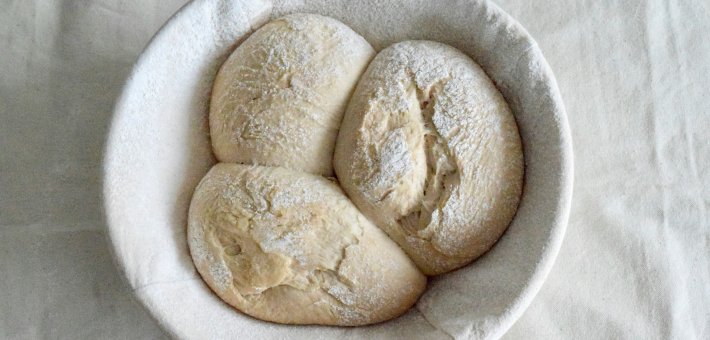
And the yeast? In the Hebrew tradition, leaven was most often a symbol of corruption. Jesus tells the disciples to beware of the leaven of the Pharisees (Matthew 16:6). Paul instructs the Corinthians to cleanse out the old leaven (1 Corinthians 5:7). So when Jesus says the kingdom of heaven is like leaven that a woman hides in flour, he is offering a provocative image. The kingdom works the way fermentation works—quietly, invisibly, and by a process that, from the outside, looks a lot like something going wrong before it goes right.
And let us not overlook the presence of a woman in these parables. In a teaching sequence full of men, sowers, merchants, and fishermen, Jesus places a woman at the center of one of his most potent images of divine activity. She does not observe the kingdom. She enacts it. Her hands are in the dough. This is domestic labor as theological metaphor, and it has been underread for centuries.
The scribe’s treasure
Jesus concludes this teaching by providing a final image. He says that the scribe trained for the kingdom of heaven is like a householder who brings out of the treasury things both new and old (verse 52). This is the preacher’s job description. We are not called to offer only the ancient text or a contemporary application. We are called to reach into the same storehouse and make the old word land in new ways, and to let the new context illuminate what the ancient community always knew. We are called to hold and honor both the new and the old, because just like a precious coin, if one side is defaced, the coin has no value.
The sheet of paper
Jesus knows that not every metaphor will land for every listener. He knows that the farmer may not track the pearl, and the fisherman may not track the seed. So he keeps reaching, keeps translating, keeps offering the same truth on a separate sheet of paper. The kingdom of heaven is here. It is hidden. It is growing. It is worth everything. He is handing us the sheet of paper. He is saying: If you could not grasp it at the speed of my first telling, read it again. Take it in. Let it land. And then go be the scribe who brings out the old and the new. Find the metaphor that reaches. Find the language that sticks. Refuse to stop translating until the word has done its work.


July 26, 2026