

Commentary on Exodus 14:5-7, 10-14, 21-29

Exodus 14 recounts one of the most famous events in the Bible: the parting of the sea by God during the Israelites’ flight from Egypt. Even in the Bible, God realizes that this miracle is a big deal, one that would seal God’s reputation as the biggest, baddest deity around (Exodus 14:4).
Indeed, as we discover when we read the portions of Exodus 14 that were excluded from the lectionary reading, we find out that God … played God with the whole thing. Like the director of a movie, God deliberately guided the Israelites so they would appear to be lost and confused. Then God hardened Pharaoh’s heart so that Pharaoh would chase after the Israelites. God did all this so that the flight from Egypt could end with a showstopper—one last, climactic firework bonanza to show Egypt who the real boss was around these parts (Exodus 4:1–4).
That God would deliberately cause such a lethal kerfuffle feels rather problematic, even sort of unethical. I mean, what about those poor Egyptian soldiers? They were just following orders while God was messing around with the heart of their leader, Pharaoh—something that God does several times in Exodus. In the Hebrew text, “heart” refers to something more like the brain. So God deliberately puppeteered Pharaoh so that he would foolishly run after the Israelites and get all his soldiers killed. And all this was to show how strong and powerful God was when God squashed Pharaoh and his army.
This problematic portrayal of God, though disquieting, leads to the first message: Who are the unstated victims of conflicts? Behind every event are many unnamed, silent victims. Behind the amazing flight by the Israelites from Egypt are thousands of ordinary Egyptians who suffered from plagues, including the death of their firstborn children—powerless people who, through no choice of their own, undergo suffering and distress just because they happen to live in a country led by a bad leader.
Who are such victims in our world—those who are framed as our enemy, but who are people just like us? Regular folks trying to get through this rough-and-tumble life who have been unwillingly caught up in larger disasters not of their own making.
God does all of this—especially tinkering with Pharaoh’s heart—to show that God is better than any other deity. And one of these competitor fake gods is Pharaoh. Kings and autocrats in ancient times in the Middle East were often deified—that is, thought of as gods. So in battling Pharaoh and defeating him, God shows that God is the only true deity of God’s people.
This whole battle between the gods leads to the second point. Who or what are the competitor fake-gods that claim our loyalties today? Who or what do we treat as more important than God? Who or what subtly claims our loyalty by quietly sucking up all our energy, worry, attention, or time? Who or what are the vultures and the vampires in our lives today?
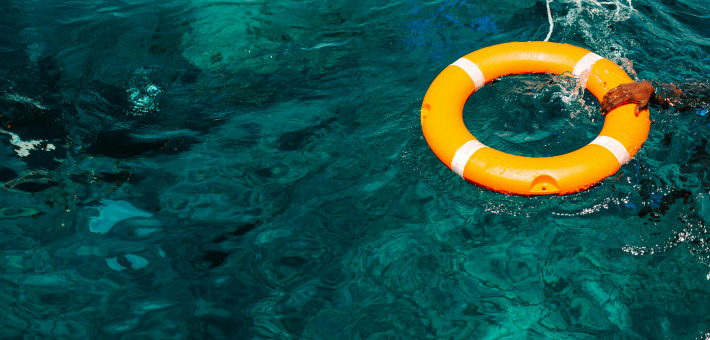
Which leads to our final point. God, in splitting the sea in Exodus, is following a well-known pattern found in ancient Near Eastern myth. This pattern entails a powerful storm god who fights with and defeats a water deity who is represented by the sea, ocean, or river. Sometimes the opponent god is even pictured as a monstrous sea creature, such as a serpent or dragon, and is referred to as the Leviathan (Isaiah 27:1) or Rahab (Isaiah 51:9; Psalm 89:9–10; Job 26:12). This water deity is the archnemesis of the ordered and peace-loving God of the Bible. As such, the water deity represents the very opposite of the God of the Scriptures. The water god, in other words, symbolizes chaos, disorder, darkness, and death.
God defeats the sea deity sometimes by splitting it, as we see in Exodus 14. Sometimes God defeats this enemy by ordering or drawing boundaries around it as in Genesis 1. By defeating or placing boundaries around “the Sea,” God brings about and reasserts peace and order. In Exodus 14, by splitting “the Sea,” God triumphs over it and, in so doing, frees the Israelites from oppression and the servitude of the false god, Pharaoh.
The defeat of “the Sea” or chaos is not one-and-done, however. Rather, “the Sea,” the chaos, is always threatening to return. As such, though God has done the hard part, the miraculous part, we too are asked to help God keep “the Sea,” the enemy, the chaos, at bay. We too must participate with God as God works to perpetually hold back “the Sea.”
The Israelites have to engage. They cannot just sit on the sidelines letting God do all the work. After God splits the sea, the Israelites have to have the faith and courage to walk between the waters of chaos and death—waters that were held up by invisible divine hands. They have to choose to follow God, the One who promises a life of peace and wholeness. And they have to turn their back on their enslavement, their past selves, the lives to which they were accustomed. They have to be brave and choose freedom. They have to join in and participate in the work of God to hold back the threatening waters of doom and disorder.
Like the Israelites, we are called to be brave, to do our part to help God hold back the chaotic waters of “the Sea” and free us from the chains of any false, competitor god who claims our attention and allegiance.
PRAYER OF THE DAY
God of salvation, you rescued the Israelites at the edge of the Red Sea. Rescue us from the things of this world that threaten our lives and livelihoods, so that we might forever place our trust in you. We pray these things in the name of Jesus Christ, our Savior and Lord. Amen.
HYMNS
Praise, praise! You are my rock ELW 862
Calm to the waves ELW 794
Eternal Father,strong to save ELW 756
CHORAL
Make my life a living prayer, Aaron David Miller
October 4, 2026