

Commentary on John 19:1-16a

Pontius Pilate cuts a curious figure in the Gospels. Aside from a dating reference at the beginning of Luke and a cryptic mention later in the same Gospel about mingling the blood of Jewish martyrs with sacrifices, we encounter Pilate only in the passion narratives. The Gospels provide few details, and the historical record is thin. Pilate appears to have served as the fifth governor of the Roman province of Judea—a role he held, according to Josephus, for 10 years. Appointed under Emperor Tiberius, Pilate would have been responsible for leading the regional military and overseeing the province’s judicial system, including adjudicating matters of capital punishment. He also levied and collected taxes and minted coins.
Historians are divided on whether Pilate was an effective governor. Some point to his long tenure—the second-longest in the region—as evidence of his competence. Others cite the relatively low status of his appointment, his lack of upward mobility, and his frequent inflammatory decisions regarding the Jewish population as signs of his inadequacy. Both Josephus and Philo portray Pilate as a cruel and obstinate man with little regard for Jewish custom or culture. Even so, as governor of Judea he was woven into the political and ritual life of Jerusalem. He was, for example, responsible for appointing the high priest and served as a political ally to the Sadducees.
Complicating matters further, Christian tradition has never fully agreed on how to interpret Pilate. His presence in the Apostles’ and Nicene Creeds indicates that he loomed large in the theological imagination of the early church, yet the significance of that presence remains contested. In some Egyptian and Ethiopian Coptic traditions, Pilate’s reluctance to execute Jesus inspired apocryphal stories about his repentance and conversion. Likely shaped by growing anti-Jewish sentiment in the early church, these texts shift blame for Jesus’s death away from Pilate and onto the Jewish priests and the people of Jerusalem.
In one such story, the Paradosis Pilati, Pilate is summoned to Rome by Tiberius to answer for Jesus’s execution. Pilate claims that the Jewish priests forced his hand. Tiberius is unconvinced, and Pilate is sentenced to death for his role. Before his execution, Pilate prays to Christ, and a voice from heaven blesses him because the prophecies have been fulfilled through his actions. Other early Christian manuscripts depict him instead as a diabolical ruler who ultimately dies by suicide and whose body is thrown into the Tiber River.
The church, it seems, has never quite known what to do with Pilate.
In John’s Gospel, Pilate appears out of place—never secure and never at rest. Jerusalem is smoldering, and two men have been arrested for capital offenses on the eve of a major festival. Pilate, who normally resided in his palace at Caesarea Maritima, has come to oversee the expanded military presence required during Passover. If the early historians are to be trusted, Jerusalem has been a persistent thorn in his side. He cannot seem to satisfy the priests, the people, the Roman authorities, or Herod Antipas. When we meet Pilate in John 18, he is shut away in his praetorium—whether for safety or solitude, we cannot know.
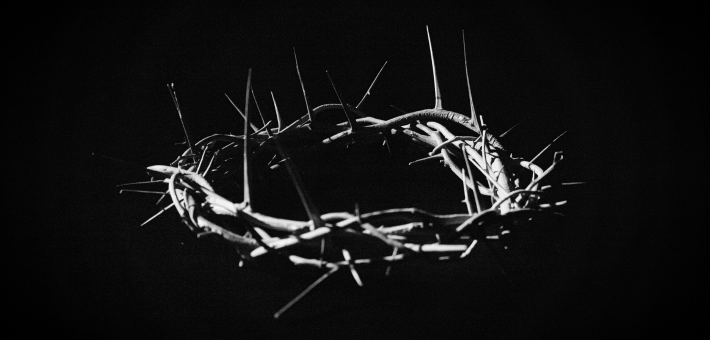
Then he encounters Jesus, who proves just as confounding as the rest of Pilate’s world. Pilate does not understand Jesus, nor does he understand the charges brought against him. Everyone around Pilate regards Jesus as a threat, yet Pilate cannot fathom why. So he resorts to violence to pacify the crowd or perhaps to loosen Jesus’s tongue. Pilate is not above torturing an innocent man if it promises some measure of peace or clarity. In a typical bit of Johannine irony, the soldiers’ mocking jeer—“King of the Jews”—contains within it the sort of confessional truth the Gospel prizes.
After the torture, Pilate presents the broken Jesus to the people and declares, “Behold.” Does he hope this display will satisfy the crowd’s desire for retribution? Once again, his instincts prove wrong. The violence only whets their appetite. Now they demand crucifixion. Pilate protests, but his ineptitude is undeniable. He can neither manage Jesus nor control the crowd.
Jesus highlights this impotence by describing Pilate’s authority as something that comes “from above.” The reader knows that Jesus refers to a heavenly authority that stands in judgment over Pilate and every earthly ruler. But how does Pilate hear this? As an insecure governor in a notoriously complex province, he likely imagines the earthly powers above him: the Syrian legate to whom he reports, the governors of more prestigious provinces, the Senate, or Emperor Tiberius himself. Jesus’s phrase “from above” can only heighten Pilate’s sense of vulnerability.
By the end of their conversation, Pilate simply wants to escape—from the priests, the people, and the wounded, inscrutable figure before him. The priests corner him by reframing Jesus not as a Jewish blasphemer but as a political threat—an enemy of the emperor. Pilate cannot ignore this charge or the possibility that he himself might be accused of disloyalty. His position is too precarious to allow rumors of sedition to spread. So he again chooses the expedient option: He hands Jesus over. In effect, he lets him go.
Pilate’s abdication is, ultimately, unsurprising. The worldly power he represents is structurally incentivized toward self-preservation. He is given the opportunity to disrupt this system and choose righteousness, but he cannot. Pilate is not guilty of malice so much as cowardice. He hides behind a belief in the innocence of the empire even as he employs that empire toward lethal ends. He enables state violence and then declares himself blameless for the destruction that follows. Pilate desires authority, but by the end of the story he has become a mere bureaucratic functionary—a man who transmits injustice as if it were an inevitable, predetermined necessity. A pitiable figure, were his cowardice not so destructive.
PRAYER OF THE DAY
Holy God,
In this season of contemplation, help us to recognize that you revealed yourself in Jesus, who walked among us and was handed over to be crucified. May we be strengthened by his presence among us today. Amen.
HYMNS
I want Jesus to walk with me ELW 325, UMH 521, NCH 490
Praise the one who breaks the darkness ELW 843
CHORAL
My song in the night, Paul Christiansen


March 22, 2026