

Commentary on Matthew 4:1-11

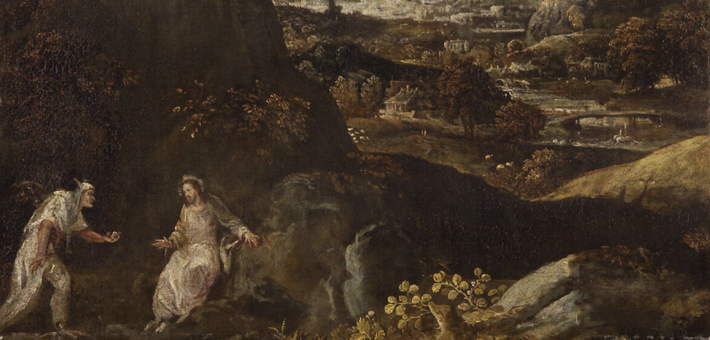
This scene, whether in Matthean or Lukan form, appears frequently in the lectionary. What to do with such a familiar passage?
The passage is susceptible to unhelpful readings. Sermons that urge parishioners to “quote scripture when you are tempted” have turned out to be very ineffective. Likewise, sermons that claim that Jesus is rejecting any concern for social justice efforts (bread), political structures and programs (power), and miracles isolate the Gospel from everyday life. And subsequently, Jesus multiplies bread to feed folks, constantly conflicts with sociopolitical leaders over societal vision and imperial practices, and performs miracles (healings, exorcisms). These actions manifest God’s empire in the midst of Rome’s empire.
Moreover, some interpreters present the devil’s tests for Jesus in contrast with Israel’s experiences in the wilderness. They appeal to both the wilderness setting and Jesus’ three citations in verses 4, 7, and 10 from Moses’ sermon in Deuteronomy 6–8. The link, though, is not compelling. In the exodus, God, not the devil, tests Israel. And the second and third tests have little or no resonance with the wilderness experience. Worse, this approach encourages some interpreters to read the scene as contrasting Israel’s faithlessness with Jesus’ faithfulness. The text does not assert this contrast. That move unacceptably emerges from and reinforces errant claims of Christian superiority and of Israel’s rejection from divine purposes.
A preferable approach attends to the scene’s position in the Gospel. The scene follows Jesus’ baptism in which God declares him to be God’s son, or agent, and representative. God has commissioned, or authorized, Jesus (3:16–17).
This identity statement is the latest in a sequence of such statements about Jesus’ identity in the first few chapters of the Gospel: the Christ (1:1, 18), son of David and Abraham (1:1), who saves (1:21), Emmanuel (1:23), a ruler (2:6), my son (2:15). This sequence aligns Jesus as an agent of the divine will. In addition, citations of Hebrew Scriptures locate Jesus in the divine purposes (1:22–23; 2:5–6, 15, 17–18, 23), and he has his own personal ambassador, John, who prepares the way for his public ministry (3:1–12).
Yet before this public ministry begins in 4:17, Jesus’ identity is tested (4:1–11). The scene’s function is not to proscribe the means or goals of Jesus’ ministry, but to establish its basis in Jesus’ identity. The scene affirms Jesus’ identity as God’s agent or son as the foundation for his ministry activity.
It does so by presenting the Matthean Jesus with devil-inspired diversions which serve as opportunities for him to affirm his identity and loyalty. Two powers collide. Verse 1 identifies God’s Spirit that leads Jesus into the wilderness, where he encounters the devil, the agent of the test of Jesus’ allegiance and identity. The devil is named without explanation; the text assumes common Jewish cultural knowledge.
Matthew’s Gospel elaborates on this opponent of God’s purposes with a series of synonyms; the tester or tempter (4:3), Beelzebul the ruler of destructive demons and its own empire (12:24–26), the evil one who produces its own human children or agents (13:19, 38), the enemy (13:39), and Satan (16:23), a cosmic force whose destiny is destruction in an eternal fire (25:41). However we think of the devil, the figure’s presence in the Gospel personifies the vulnerability of human life and life in relation to God. No one, not even God’s anointed agent, is free from having their identity and loyalty tested.
The Gospel presents the cosmic force’s work through human agents. With nasty polemic and verbs of “testing” and “approach,” it identifies the Jerusalem leaders as the devil’s agents. Pharisees, Sadducees, and Herodians “approach” and “test” Jesus (16:1; 19:3; 22:18, 35–36). This demonization of Jewish leaders has fueled a long and tragic history of anti-Judaism. The devil also opposes new Jesus-followers (13:19). Circumstances of trouble and opposition, the cares of the world, and wealth turn Jesus-followers away from faithfulness (13:20–23). So, too, do household members (10:34–39).
The devil presents Jesus with three proposed actions that have highly desirable outcomes. If Jesus accepts the devil’s options, he can address extensive food insecurity for many in the Roman world by turning stones into bread. This is a brilliant idea. He can also gain power over all the empires of the world. Here the Gospel makes a crucial political statement in revealing the devil as the power that controls the Roman Empire. And Jesus can rely on God’s protection in a dramatic public and attention-getting display.
In fact, Matthew’s Gospel will later narrate Jesus performing powerful acts: feeding crowds (14:13–21; 15:32–39), gaining all authority in heaven and earth in his resurrection (28:18) and return (24:27–31; 26:64), and publicly displaying God’s power and compassion in healings and exorcisms (4:23–25).
Yet Jesus rejects the devil’s invitations. Why? If Jesus acts on the devil’s bidding, he becomes the agent or son of the devil. He ceases to be the agent or son of God. He would betray his identity.
Further, the devil misrepresents the nature of Jesus’ sonship. The devil’s three tests involve only displays of power. Jesus will, of course, utilize miraculous power, but his sonship also involves suffering and death (1:21–23; 16:21).
The scene ends with the devil’s departure (4:11). The scene has exposed the devil’s opposition to divine purposes, its claim to control the empires of the world (especially Rome’s), its demands for obedience and homage, its workings through sociopolitical elites and structures, and the limits of its power. These insights are crucial for the Gospel’s narrative of Jesus’ public activity that follows.
How will Jesus manifest God’s empire? His calling of followers, his conflicts with the Jerusalem leaders, his actions that reverse human suffering (exorcisms, feedings, healings), his teachings about life that manifests God’s empire, his eschatological declarations of God’s triumph, and his crucifixion and resurrection play out in an ongoing struggle between the devil-controlled Roman Empire and God’s empire.
With the devil’s departure, angels—agents of God’s presence—care for Jesus (4:11).



February 22, 2026