

Commentary on Ephesians 1:15-23

The believers at Ephesus were Paul’s pride and joy because they turned from a pagan life to a life of faith in God, Jesus Christ, and the Holy Spirit. Every pastor rejoices when the community responds to the gospel. Hence, Paul, in this part of Ephesians, breaks into thanksgiving and prayerful praise because of believers’ faith. Mentioned about nine times in the letter, faith in God stands out as the hallmark of the Ephesian community (Ephesians 1:15–16).
Similarly, the contemporary Christian church should rejoice when new members join the church and give their lives to Jesus Christ, accepting him as their Lord and Savior. This celebration that Paul does continually is not just about a meager church, but it’s about numerical and spiritual growth. In the Global South—that is Africa, Asia, and Latin America—the growth of the church is not measured by regular members, but by a greater number of people who publicly declare their repentance from sin and seek to live a life of faith in Jesus Christ. An experience of God and encounter with Jesus are a reality in the Global South, a sure sign that God is at work in people’s lives.
As God’s Spirit was at work among the Ephesians, he is also at work in today’s world, inviting and convicting a new generation of believers to experience God and encounter Jesus in their faith walk. As such, Paul’s prayer is not just mentioned to the Ephesians, but is addressed to God, who is righteous in all his works with humanity (verses 17).
In Paul’s thanksgiving for the faith of the believers in the Ephesian Christian community, there is a reminder that God has always planned and purposed salvation for all people from eternity. Eternally, God loves all people, even those who may not know him as a heavenly Father. In Jesus Christ, God’s plan for salvation history was implemented, and God’s love was displayed on the cross of Jesus, his Son and our Lord. In other words, God did not discontinue his plan for salvation in the Pentateuch, but the New Testament is a living testimony of the nature and essence of God. Like Paul, Christians should be thankful for God’s plan of salvation and always live in love with others.
At the center of Paul’s thanksgiving and prayer, there is the message of God’s revelation: that God is open and gracious to help believers appropriate the Holy Spirit and live to reap the spiritual blessings of faith, hope, and love (1 Corinthians 13:1–13). One of the central spiritual blessings the church does not teach to believers is wisdom and revelation, yet God is the fountain of wisdom (Ephesians 1:17b; Proverbs 3:1–35). Faith, wisdom, and revelation are spiritual blessings believers cannot live without.
These three spiritual blessings, when appropriated, will usher in new insights, discernment, and inner fortitude (1 Corinthians 2:6–16). These three mentioned blessings can make a believer’s heart become an inner sanctuary and make faith a living reality. Spiritual discernment makes hope alive and opens a believer’s eyes to see the true picture of the world and where the universe is heading under the guidance of God (verse 18).
Pastors, religious leaders, and lay people all need to cultivate, pray, and plead with God to become mature in the affairs of the Holy Spirit. The Holy Spirit is Jesus, and he cannot be manipulated because his personality is enshrined in the Father, Son, and Holy Spirit.
Having been born and raised by parents who encountered Jesus at a younger age—especially my mother, who was blessed with gifts of healing, speaking in tongues, and even interpreting tongues, as well as the gifts of prophecy—I can testify that Paul’s message in Ephesians 1:15–23 is a concrete reality.
The questions we need to ask in North America and Europe are: Where is the Holy Spirit in the Global North church? Why don’t many Christians living in these affluent and wealthy worlds speak in tongues, practice healing ministry or even exhibit a hunger for the Holy Spirit? The apostle Paul might find it perplexing that the Holy Spirit is not at the center of these 21st-century congregations. Without the Holy Spirit’s wisdom, as well as revelation, Christian knowledge of God is so shallow and could even be called too religious. The contemporary world is in urgent need of the Holy Spirit.
Paul was not oblivious to the imperfections of humanity and the church, but he prayed that believers see that all that they seek to do in the life of the church cannot be done without the power of the Holy Spirit (verse 19). Yes, clergy and ecclesial leaders may have academic head-knowledge to do the business of the church, but there is a need to convert knowledge to the heart, where God can transform, shape, form, and baptize academics for the mission and gospel of Jesus Christ (verses 18–19).
The power to do God’s work was unleashed on the cross and in the resurrection of Jesus, and that energy is available to all who invoke and call upon the Spirit. If poor Christians in the Global South can revive and revitalize the church, why can’t Christians in the Global North do the same? Education that is not for the service of the kingdom of God is useless because it feeds egos, arrogance, and pride. Jesus, who is called the Advocate in the Gospel of John, is the one who infuses the church with his presence and power. He has the power to influence the church for God’s purposes, and healing, feeding, and teaching ministries are done under the auspices of God’s Son (verses 20–21).
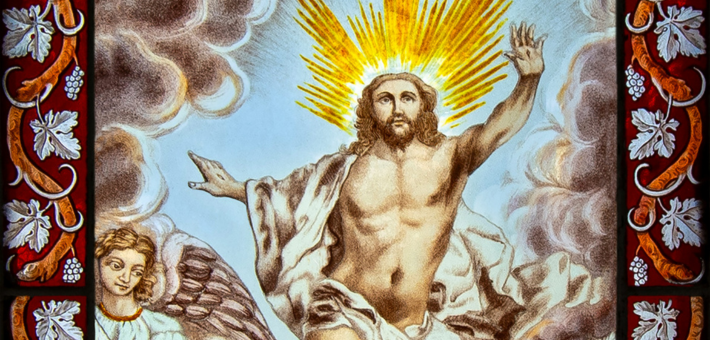
The work of the Holy Spirit’s ministry is vast, and the church is the space where God, Jesus Christ, and the Holy Spirit are manifested. God, who raised Jesus from the grave, made him the head over all that happens in the life of the church and its believers (Ephesians 1:22–23; Philippians 2:9–11). In other words, pastors, bishops, and lay leaders are not the heads of the church, but God, Jesus Christ, and the Holy Spirit are the orchestrators of all that happens in and around the church.
Our failure to recognize the presence of Jesus in the church will lead our clergy leaders to become idols. Idols do not save people, but only Jesus saves and calls people into his church, heart, and soul. As a reconciled community, the church becomes the harbinger of love, where God is worshipped and exalted. The writer of Ephesians 1:15–23 makes it clear that the love and life of God are poured out and manifested in the believers, and the church becomes the image of the One who fills everything in every way (verse 23). In all that the author writes, we should observe that he does not make the life of the church a “once upon a time” event, but that God’s Spirit is ongoing until the Parousia.
All that the church and its believers need are God, Jesus Christ, and the Holy Spirit. And this is the gospel embedded in this Ephesians passage. When the Holy Spirit is appropriated, the church will be transformed to resemble the image of Jesus, and believers will live and become the ambassadors of God in the whole world.


May 14, 2026